Wednesday, February 24, 2010

Bishop-Elect Bambera


Congratulations to our neighbor to the north of the Diocese of Harrisburg. Bishop-Elect Joseph Bambera will succeed retired Bishop Joseph Martino as the tenth Bishop of Scranton. AD MULTOS ANNOS. His Excellency attended my alma mater for major seminary as did Bishop William Skurla, Eparch of Passaic, NJ (Ruthenian Catholic). As Chaplain to the Italo-American Apostolate in the Diocese, I extend the well wishes of the Capital Area paesani to Bishop-Elect Bambera. I may ask him NEXT YEAR to be our Celebrant at the diocesan Italian Mass. We have one on Epiphany, San Giuseppe and the Assumption.

I told my mother in Erie about the news today since she is of Polish descent just like Bambera's mom while my dad (deceased) was Italian (actually, Sicilian, so don't forgetaboutit).

While Mount Saint Mary Seminary in Emmitsburg, MD, has the elegant moniker of being known as the 'cradle of bishops' every now and then some high caliber good men are found from other places. Now only three American dioceses are sede vacante and those of us in the Diocese of Harrisburg and praying and hoping for a repeat of the phenomenal and wonderful shepherd we previously had in Bishop Kevin Rhoades, now Ordinary of Fort Wayne-South Bend. Keep us in your prayers, please.

Tuesday, February 23, 2010

‘Don’t blame all church attacks on fanatics’

‘Don’t blame all church attacks on fanatics’

A very dear friend of mine, Fr. Anthony Mariappa Anthappa , is a priest of the Diocese of Bangalore, India. One of his parishes (he is pastor of three) was recently vandalized and robbed. While there are numerous instances of terrorism being committed by Muslim and Hindu extremists, there is also the age old phenomenon of theft and vandalism by local thugs and criminals. Whether a terrorist or a crook desecrates your house of worship, the end result is still the same, your church has been violated. Thieves and terrorists may have different motives but they employ the same means: violence and destruction.

9-11 showed us the depth to which Al Qaeda would sink in their terroristic attacks on America. Sadly, natural disasters like Hurricane Katrina also showed us how local criminal elements take advantage of situations and looting and pillaging often permeate an area already devastated by mother nature.

While we see similar church burnings here in the USA (e.g., Texas), most of the time the vandalism and theft are committed by petty criminals or isolated psychotics. India has those, too, but also the presence of full blown terrorism and deadly anti-Catholic persecution from rival groups. Militant and extremist Hindus and Muslims do not represent the majority of their creed but there are enough of these radicals to cause grave harm to church property and personnel. Clergy and religious are targets of personal attack and violence. Catholic churches are targets of vandalism and desecration. When this happens in America, the nation is repulsed and seeks swift justice whenever any mosque, synagogue or church is attacked. This is not the case all over the world. Imagine coming to Mass at your local parish only to find it ransacked and vandalized, with the Blessed Sacrament desecrated and the Tabernacle violated. It makes my stomach sick just thinking of it.

Please pray for Father Anthony and his parishioners. If you are able to help him rebuild his church please contact me at frtrigilio@live.com and I will in turn get you in contact with him or at least I can help you send him some donations to try and rebuild.

Monday, February 22, 2010

Viva il Papa


Today is the Feast of the Chair of Saint Peter. The Latin word for chair is CATHEDRA and from that we get the English word cathedral since it is the church where the Bishop's 'cathedra' or chair resides.  The chair is a symbol of authority going back to ancient antiquity. While kings, queens and other monarchs had thrones during the Mediaeval era, going back even further, we see the Emperor of the Roman Empire having is imperial CHAIR. Whenever he sat on that chair, all judgments issued were considered 'official' and binding on the empire. Local authorities, especially the governors of the empire, also had a chair which symbolized the authority of Caesar. Whenever the Governor sat on the chair, he represented the Emperor and his authority.

Tu es Petrus et super hanc petram ædificabo Ecclesiam meam

Jesus commissioned Peter as the first pope in Matthew 16:18 and He entrusted to him the keys of the kingdom. Hence, Our Divine Lord's promise to every Roman Pontiff, "whatever you declare bound on earth, shall be bound in heaven; whatever you loosed on earth shall be loosed in heaven."  Not only is this the biblical foundation for the doctrine of Papal Infallibility (Catechism #891; V2 Lumen Gentium #25) but it is also the canonical raison d'être for Papal Primacy. The keys Christ gave Peter were not physical keys but symbolic ones. The two crossed keys in the Papal flag (one silver, one gold) represent these keys.


Chancellors were traditionally given two keys by the sovereign who installed them into office. Every King or Queen as monarch needed a trusted person to represent the crown. Literally speaking, the Lord Chancellor would be given a key to the royal prison and a key to the royal treasury. Because he was so trusted by the ruler, the Lord Chancellor acted in persona regis (in the person of the king). He had the keys and the authority to lock up and imprison any and all of the enemies of the king. He could also show mercy and compassion and occasionally release a prisoner. The power to bind and loose was indeed a significant one. So was the key to the treasury. The Chancellor had the authority to collect and protect the revenues (taxes) levied on the inhabitants of the realm. He was keeper of the King's gold, so to speak. That same key which locked up the gold could also unlock it. Besides collecting, the Lord Chancellor could also disperse. He had authority to buy and make purchases; to pay the knights and soldiers their wages; to give alms to the poor on behalf of the monarchy.

So when Jesus gave Peter the keys, He was giving the first pontiff the power and authority to bind and loose. As the 1983 Code of Canon Law states, the Roman Pontiff enjoys supreme, full, immediate and universal ordinary power (CIC #331)  Unlike the separation of the Judicial, Legislative and Executive powers in our American government, the Pope possesses all three in his office as supreme head of the universal Church. No tribunal or even Ecumenical Council can override his decisions or contradict his authority. His infallibility only extends to matters of faith and morals, but his plenitudo potestates in terms of ecclesiastical jurisdictional authority has no limit. Hence, while he is not infallible in his executive or legislative powers, he is still supreme and there is no higher authority save God Himself. His teaching authority (papal magisterium) is either EXTRAORDINARY (ex cathedra) or ORDINARY (papal encyclicals).

Saint Ambrose said it best:

UBI PETRUS IBI ECCLESIA

Where Peter is, there is the Church.  One Church has maintained a consistent two millennia continuity with the Vicar of Christ and Successor of Saint Peter. The Eastern Orthodox split in 1054 had many contributing factors but the final act was the separation of the Eastern Bishops from the unity with Rome and particularly with the Bishop of Rome as supreme head of the universal church. Although there had been Patriarchs of Jerusalem, Antioch, Alexandria, and later Constantinople, the Patriarch of Rome was more than primus inter pares (one among equals). When the Council of Chalcedon read the Tome of Pope Saint Leo, the Bishops said "God has spoken to us through Peter".  The Protestant Reformation began in 1517 when Martin Luther separated himself from Rome (aka, the Pope) and formed the Lutheran Church. King Henry VIII did likewise in 1534. Note that the dates of establishment of these churches root themselves in the act of separating from the authority of the Pope. Albeit there are theological, liturgical, economic, political and other elements in every schism the Church has endured, nevertheless, there remains ONE SUCCESSOR OF SAINT PETER and he was, is and will always be the Bishop of Rome. Jesus said HE was building HIS church on the rock of PETER. The gates of hell shall not prevail. Despite schism after schism, scandal after scandal, controversy after controversy, there is still one Vicar of Christ on earth, one Successor of Saint Peter.

The so-called sede vacantists who claim there is no valid pope are no different from the Protestants or Orthodox who came before them centuries ago. UBI PETERUS IBI ECCLESIA. Since the Holy See is and can be judged by no one, no council or synod has the power to depose any pope or even to declare him heretical and excommunicated. Unlike divine inspiration where the Holy Ghost personally ensures only what and how God wants what to be said is faithfully written by the sacred author, papal infallibility is not of the same genre. It merely means an absence of doctrinal or moral error being taught. This is no guarantee that a particular pope is LIVING the proper moral life or that he even personally believes all that he should, but it does mean that God prevents him from imposing an error upon the people. Infallibility is a negative charism which simply means every Pope is protected from issuing a universal error in faith and morals. He can, as we have seen in church history, commit moral evils and theoretically any pope could have some personal theological mistakes, but he is prevented by papal infallibility from imposing them as formal doctrine upon the rank and file. His jurisdictional authority is not connected to his infallibility, hence, his prudential judgments in making bishop assignments or granting dispensations or adjudicating tribunal cases are all prone to being done better or more timely. Nevertheless, since he possesses the fullness of authority, his decisions still have complete efficacy and full effect. In other words, the pope's authority in non-magisterial matters MUST still be obeyed and adhered to by all the faithful. Subsequent popes can improve their predecessors prudential judgments by making their own non-magisterial authoritative decisions.

What is true is always true. How it is said and when it is said, is a matter of prudential judgment. Revealed dogmas can never be repealed or negated nor can they be contradicted. Their explanation can be enhanced and improved at any time. I am always leery about making any criticism of any papal decision even non-magisterial. The reason is only someone who KNOWS with metaphysical certitude exactly what what the pope in question KNEW, WHEN did he know it and HOW did he understand what he knew, can make an educated opinion on that papal judgment. Best to leave it in the hands of God Who alone knows all that is in the hearts and minds of all men. Already, in the advent of a potential beatification of Pope John Paul the Great, there are some on both the right and left who wish to question his prudential judgments in matters of liturgy, bishop appointments, and other non-magisterial decisions. While this is allowable as none are connected to papal infallibility, because of papal primacy, it would be prudent to avoid dissecting and second-guessing what any pontiff was thinking.

I realized that when I became a pastor and was tempted to externalize my private opinion on prudential judgments of my predecessors. My mentor, Fr Bob Levis, warned me the day I became a pastor for the first time (2002). Never critique who came before you. Try to improve where you can but make it look organic, natural and logical as opposed to undoing what was done before. And it works. When the 2002 IMGR was finally was implemented, I used it as the impetus to install a Crucifix on the wall of the sanctuary and placed the Resurrected Christ over the door of the back of the church so people could see it on their way out, while they would see the Crucified Christ on their way in and during the Sacrifice of the Mass. I also moved the Tabernacles in both of my two churches to the center of the sanctuary. When people saw this was a continuation rather than a disruption, they appreciated it. The latest documents from Rome are there to fine tune and properly implement what was intended and actually said at Vatican II, not the amorphous and ambiguous 'spirit of Vatican 2'

When Pope Benedict XVI came to America, I used the opportunity to introduce to my parishioners the option of celebrating Mass AD ORIENTEM and using the six candles and crucifix on the altar of sacrifice.  I also placed a kneeler at Communion to afford the option of receiving on one's knees or standing, in the hand or on the tongue, as is allowed by our local diocese. When the people see these things as logical extensions of what we believe (lex orandi, lex credendi), they appreciate not having their intelligence insulted. By not trashing or bashing my predecessors, I showed respect for the office I myself now held. Mistakes can and must be corrected and undone but they can and ought to be done PRUDENTLY and with CHARITY but also with some DIGNITY.  Whether the Extraordinary or the Ordinary Form, both have the reverence and elegance to fulfill the spiritual needs of the faithful since both are valid and licit and have come to us from Holy Mother Church. Either one can sadly be abused and when the Celebrant becomes the center of attention rather than Christ and His un-bloody reenactment of Calvary on the altar, then the sacred liturgy deteriorates from divine worship to human approval and amusement. Even the so-called 'quickie' TLM of the 1950's some pastors were infamously famous for (one priest in my original diocese bragged he had the shortest Sunday Mass in all thirteen counties and was known as the Golfers' special), were no different than some of the Novus Ordo vernacular Masses said for the same audience.

If all us priests and all the bishops celebrated Mass with the same reverence, attention and devotion as is evidenced by His Holiness Pope Benedict, then we would have nothing to worry about in terms of vocations, donations or any other concerns.


Canti Religiosi - Christus vincit Christus regnat Christus imperat

Friday, February 19, 2010

Quadragesima (Lent) - practical suggestions


Every year parishioners ask me as do hundreds of others via email, what can or ought we to do for Lent. The Forty Days of Lent are meant to be PENITENTIAL and to remind us that Our Divine Lord, Jesus Christ, spent 40 days in the desert before embarking on His public ministry. Sacred Scripture highly recommends the ancient practice of

PRAYER
FASTING
ALMSDEEDS
(almsgiving, i.e., the donating of money OR 'giving of alms' to church and to the poor, is but one form of almsdeeds. The spiritual and corporal works of mercy, according to Saint Thomas Aquinas, constitute the substance of almsdeeds)

Here are some suggested things to either GIVE UP or TO DO during Lent

1a. Give up one hour of television and/or one hour of internet each day in Lent [techno-fast]
1b. Spend the same amount of time (1 or 2 hrs.) in prayer (rosary, divine mercy chaplet, reading lives of the saints, liturgy of the hours)

2a. Give up a small routine (e.g., replace tea for coffee or vice versa; drink coffee or tea without sugar or substitute and/or without milk) each day of Lent OR alternate weeks so as not to be too accustom to the practice [beverage-fast) OR give up fancy coffee drinks (lattes, cappuccinos, chai's, etc.) and drink regular or decaffeinated normal coffee for Lent OR give up afternoon cocktails
2b. Donate the equivalent amount you would have spent on specialty coffees (drinks) to your parish or diocesan lenten appeal

3a. Give up going to movies (or renting them or pay-per-view, etc.) for Lent
3b. Spend equivalent in contribution to Haiti Earthquake Relief efforts, like Catholic Charities, et al.

4a. During Lent, whenever dining in a restaurant, opt for your 3rd or 4th choice from the menu rather than the 1st or 2nd. And during Lent, send nothing back, even if the food is too hot or too cold or not enough. In other words, do not complain, just offer up the minor inconvenience. Only send back inedible or undercooked food which could harm you. Nutritious food which just doesn't taste good can still be eaten as a penance as long as it won't make us sick.
4b. Eat your least favorite vegetables in Lent rather than your favorite ones

5a. Voluntarily fast for three hours (rather than just the mandatory 1hr) before receiving Holy Communion during Lent.
5b. Spend an extra 15-30 minutes BEFORE Mass in prayerful preparation before and/or after Mass in thanksgiving.

6a. Mark off each weekday of Lent with a different devotion (e.g., Rosary on Mon.; Bible reading on Tue.; Divine Mercy chaplet on Wed.; Catechism reading on Thr.; Stations of the Cross on Fri.; Lives of Saints on Sat.) but stick to same practice every week.
6b. Spend time visiting the sick at a nursing home, hospital or shut-in. Alternatively, telephone an elderly aunt, uncle or grandparent and spend at least a half hour or more.


7a. If you already give up meat on all Fridays of the year, then during Lent consider giving up meat on all Mondays and Wednesdays as well as Fridays.
7b. If a vegetarian, then besides abstinence from meat on Fridays, abstain from non-green vegetables on Fridays OR eat your least likely and least favorite dish (e.g., for many of us, that would be Brussel sprouts) instead on this penitential day.

8a. Fast from the remote control for the TV during Lent and force yourself to physically get up and change the channel manually.
8b. Tape off the microwave during Lent and force yourself to heat everything the older, and more time consuming manner.

9a. Give up one hobby during Lent (bowling, cards, quilting, etc.)
9b. Spend same equivalent time with family and/or friends doing something wholesome and edifying (prayer, Bible study, corporal works of mercy, etc.)


Friday, February 05, 2010

Thursday, February 04, 2010

Catholic America: Catholic clerical narcissism - On Faith at washingtonpost.com

Catholic America: Catholic clerical narcissism - On Faith at washingtonpost.com

Despite numerous efforts, my rebuttal to this article is not being published on the Washington Post website.
So much for fair and balanced journalism.

Here is my reply (after you read the above 'opinion' )


OUCH! Why the ad hominem attack and why was it necessary to imply the Confraternity of Catholic Clergy is guilty of clerical narcissism? I agree that sadly there are some members of the clergy who are more concerned with their 'career' insofar as they seek to climb the ecclesiastical ladder, so to speak. Most priests and deacons, however, got ordained to serve God, His Church and His People.

What is narcissistic about seeking personal holiness? Is this not what every Christian is asked to do? Why castigate an association of clergy which merely seeks to promote ongoing post-ordination formation of its members? The Second Vatican Council in the document PRESBYTERORUM ORDINIS officially teaches that ordained ministers need to live holy lives to help them help their parishioners do likewise. Vatican II spoke of the universal call to holiness. All the baptized are challenged to become saints. Ongoing spiritual, intellectual, pastoral and human formation for those already ordained is mandated by the Directory on the Ministry and Life of Priests. Why is it presumed that when priests and deacons pray, study and promote healthy fraternity that somehow these would conflict with the mission to evangelize and catechize?

As President of the CCC, I can vouch that our members are young and old, from east coast to west coast, from middle America to deep south. All of them profess their love of Jesus Christ and especially during this YEAR FOR PRIESTS, it was an honor and pleasure for us to participate in a first time international gathering of English speaking clergy in Rome. We did this not for selfish reasons. On the contrary, ongoing formation is but a means to an end. Our final goal is the sanctification of the people we serve in the parish. We can only help them if we first help ourselves learn and grow as fellow pilgrims on the journey. Professing fidelity to the Pope and Magisterium is something we are not embarrassed nor ashamed of yet I cannot see how it could ever conflict with caring for the poor or spreading the Good News. You do us an injustice by inferring or implying a form of clerical narcissism. When doctors attend annual workshops and network with fellow physicians, it is to help them become better doctors to better treat their patients. Likewise, whenever deacons, priests or bishops engage in ongoing formation, especially in annual seminars and workshops and whenever they spend some quality time together in prayer, study and fraternity, it is precisely to enable them to go back to their people and better serve them.

We do not claim the CCC is a panacea and realize there are other groups, associations and societies tailored for the gifts, talents and needs of the individual members. Please do not paint us all with one wide brush. If the Council Fathers at V2, the 1983 Code of Canon Law and the Congregation of the Clergy all agree that ongoing formation and the pursuit of personal
holiness is a good and honorable objective for the ordained, how can it be seen as selfish? Our only desire is to help as many of our people get to Heaven as is possible, by the grace of God and with the help of continued formation which includes prayer, study and personal sanctification.

Fr John Trigilio, Jr.
President
CCC

Monday, February 01, 2010

Pope Reminds Bishops to Be Close to Their Priests

Papa Benedetto spoke to bishops from Ireland and the United Kingdom during their quinquennial ad limina visit.


In this Annus Sacerdotalis [Year for Priests], I urge you to hold up to your priests his example of dedication to prayer, pastoral sensitivity towards the needs of his flock, and passion for preaching the Gospel. You yourselves should set a similar example. Be close to your priests, and rekindle their sense of the enormous privilege and joy of standing among the people of God as alter Christus. In Newman’s words, "Christ’s priests have no priesthood but His … what they do, He does; when they baptize, He is baptizing; when they bless, He is blessing" (Parochial and Plain Sermons, VI 242). Indeed, since the priest plays an irreplaceable role in the life of the Church, spare no effort in encouraging priestly vocations and emphasizing to the faithful the true meaning and necessity of the priesthood. Encourage the lay faithful to express their appreciation of the priests who serve them, and to recognize the difficulties they sometimes face on account of their declining numbers and increasing pressures. The support and understanding of the faithful is particularly necessary when parishes have to be merged or Mass times adjusted. Help them to avoid any temptation to view the clergy as mere functionaries but rather to rejoice in the gift of priestly ministry, a gift that can never be taken for granted.

These words apply aptly here in the United States as well. Our bishops NEED to be close to their priests and deacons. No one is suggesting that the dignity and honor accorded someone who possesses the fullness of the priesthood as a successor of the apostles be denied or diluted. On the contrary, we priests and deacons WANT to honor and show respect to our superiors but we also want to know and see that they care for us, not as mere employees but as spiritual sons.  Bishops are not managers or corporate executives. They are shepherds and spiritual fathers. They govern, teach and sanctify. They are the pastor of the local church we call a diocese. The business model of ecclesiolog which permeated the American church in the 1970's and lingers even today is not biblical nor theological. It is sociological but is also detrimental. The church does business but she is more than a business herself. She is the spotless bride of Christ. Holy Mother Church is much more than a flow chart of responsibilities.  Mission statements cannot replace divine law or divine revelation.  When clergy are in spiritual need, in deed, even when they are in trouble, they need a FATHER to counsel them, to correct them, to discipline them, to forgive them and to love and affirm them.  Managers and bureaucrats cannot do that.  Good shepherds love and know their sheep and do NOT act like hired hands.  Pastors will practice what they themselves experience. If the bishop and diocese act and work merely as a business or local government, then that model will extend to parish life. IF however, the family style of relationship where the father is the head of the family is used by bishops to his priests, priests and deacons will do likewise in the parish. Not democracy or republic but FAMILY as God Himself ordained.


Sunday, January 31, 2010

Perennially Valid

  Dr. Ralph McInerny

Doctor Ralph McInerny was a professor of philosophy and the Michael P. Grace Professor of Medieval Studies at the University of Notre Dame. He died on January 29th, 2010, at the age of 80. An unabashed Thomist, Professor McInerny never hid his love and commitment to the philosophy often referred to in Church documents as being PERENNIALLY VALID. Thomism is more than the personal thoughts of Saint Thomas Aquinas. It is the entire perspective of moderate realism based on the Aristotelian principle that reality can and must be objectively known. The rational intellect abstracts via the senses from individual objects universal ideas that are known and knowable only to the rational mind.

Former President of the Fellowship of Catholic Scholars, Dr. McInerny debated vigorously attempts to 'modernize' Thomism by adapting it to Kantian philosophy (aka, Transcendental Thomism). He preferred a more pure presentation and application of the Angelic Doctor's philosophy in the tradition of Jacques Maritain and Etienne Gilson.

Author of the "Father Dowling Mysteries", he also wrote commentaries on how the so-called 'spirit of Vatican II' was used by some modernists to distort the real spirit found in the actual text sixteen documents of the Council.

He will be sorely missed and was a beacon of hope at Notre Dame showing that one still can be orthodox and a devout Catholic, loyal to the Magisterium and Roman Pontiff while teaching at that infamous institution.

REST IN PEACE.

Sunday, January 24, 2010

Pravda & TASS reincarnated

Once thought dead after the Cold War ended, the propaganda journalism of the former Soviet Union (Pravda and TASS news agency) can now be rediscovered in American magazines.
 
Krista Gesaman wrote in Newsweek (at 7:15 am) on Friday, January 22, 2010 an article entitled:
Who’s Missing at the 'Roe v. Wade' Anniversary Demonstrations? Young Women

Quoting  a D.C. cop, the Newsweek author says:
"The organizers are getting older, and it’s more difficult for them to walk a long distance,” says Stanley Radzilowski, an officer in the planning unit for the Washington, D.C., police department. A majority of the participants are in their 60s and were the original pioneers either for or against the case, he says."

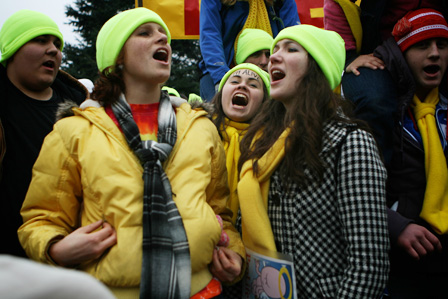
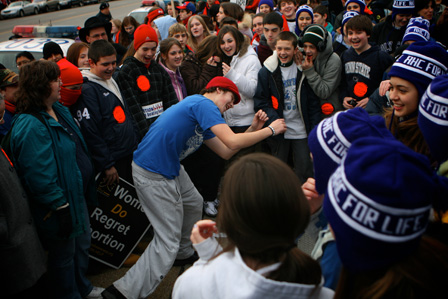
Curiously, though, the Vigil Mass for Life at the Basilica of the National Shrine of the Immaculate Conception had 1,000 priests, a hundred deacons, 400 seminarians and at least 4,000 young people (in addition to the middle aged and senior citizens who also attended).  More interesting is that the article was written BEFORE anyone got to the Mall for the speeches (which were at 12 noon)  Thousands of youth attended a Mass at the Verizon Center at 10 am and when the March began moving toward the Supreme Court, there was at least a crowd of at least a quarter million if not 400,000.  Do these images look like people from a nursing home? 


Fr Vincent Rigdon, Fr Michael Roach,  Fr John Trigilio,  Fr Ken Brighenti

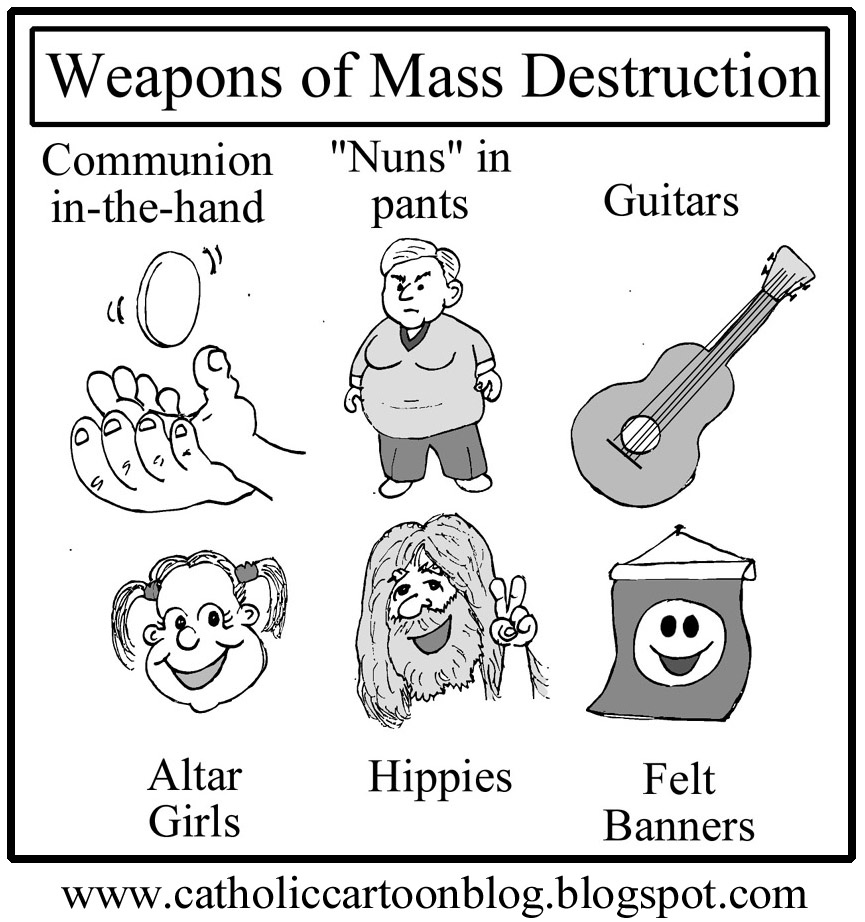
Catholic chuckles


Wednesday, January 20, 2010

The Recovering Dissident Catholic: All Hands On Deck!

The Recovering Dissident Catholic: All Hands On Deck!

tu es sacerdos in aeternum

hence, if Father is not a pervert or heretic, and if he can and will celebrate the Sacraments validly, licitly and reverently, who cares what his age or temperment; whether he was trained in Rome or at some local seminary; whether a Monsignor or just a parish priest? In some dioceses, however, personality and politics have too much influence on transfers, assigments and resignations.

My Blog List

Blog Archive