Wednesday, March 30, 2011

Bishop Aquila urges clergy not to let lies take hold among faithful

Bishop Aquila urges clergy not to let ‘lies’ take hold among faithful :: Catholic News Agency (CNA)


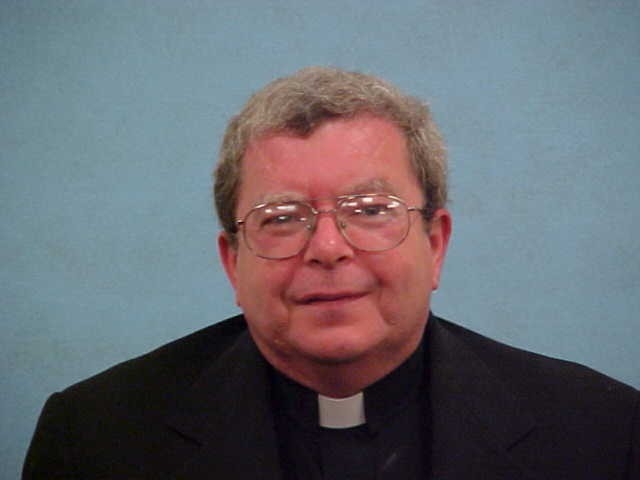
Bishop Samuel Aquila of Fargo
.- When bishops and priests are hesitant in exercising their authority, the “father of lies” takes hold of the hearts and minds of the faithful, Bishop Samuel J. Aquila of Fargo warned recently.

“One must honestly ask, how many times and years may a Catholic politician vote for the so called ‘right to abortion’ … and still be able to receive Holy Communion?” the bishop said.

The continual reception of Communion by those who “so visibly contradict and promote a grave evil” creates “grave scandal” and undermines the teaching and governing authority of the Church, he warned. The faithful can interpret these actions as indifference to the teaching of Christ and the Church on the part of those who have “the responsibility to govern.”

“If we honestly pray with the Gospel we can see that hesitancy and non-accountability is not the way of Jesus Christ, but rather it is a failure in the exercise of governance,” Bishop Aquila told a March 18 symposium in Philadelphia about the spirituality and identity of diocesan priests.

While Jesus provides criteria  in Matthew 18 for correcting a brother or sister who sins, the bishop questioned whether Catholics follow this example.

If these criteria had been followed with those who dissented from Church teaching against contraception in 1968, he asked, “would we still be dealing with the problem today of those who dissent on contraception, abortion, same-sex unions, euthanasia and so many other teachings of the Church?”

He cited Pope Benedict XVI’s conversation with Peter Seewald in the book “Light of the Word,” where the Pope connected an anti-punishment mentality to the response that some Church officials have had to sexual abuse among clergy.

The awareness that punishment can be an act of love “ceased to exist,” the Pope said. “This led to an odd darkening of the mind, even in very good people.”

Pope Benedict said that love for the sinner and love for the person harmed are “correctly balanced” when the sinner is punished appropriately.

Bishops and priests should not apologize or make excuses for the teachings of Christ and the Church, Bishop Aquila exhorted. Rather, they should teach with “charity and unhesitating truth.”

The exercise of Church authority faces challenges because secular culture “makes man into god” and undermines any authority attributed to God. Bishops and priests should turn to Jesus Christ to learn how to exercise their authority in governing the Church, the Fargo bishop said.

Jesus was “direct” in calling people to conversion and to change their way of acting and thinking, he pointed out.

“This directness makes many of us uncomfortable today.

“We should follow his example and language, even if we do not use his precise words. His language is good to contemplate and definitely should challenge us to look at how we correct the faithful, including priests and bishops, and speak the truth especially with those who say they are with Christ and the Church but do not accept the teaching of Jesus and the Church.”

Jesus’ “forceful” language towards the Pharisees and Scribes “would never be tolerated today” but the Gospel writers did not hesitate to pass down his words, Bishop Aquila said.

“In love Jesus makes these direct statements to open the eyes of those whose hearts and minds are hardened. His straight talk, given in love for the person, desires the conversion and holiness of the person to the ways of God,” the bishop explained.

“(T)oo many people understand correction or punishment as not loving the other or as dominion over the other, and this is the work of ‘the father of lies.’ A reluctance or hesitancy to correct and properly punish does not invite the other into the truth that frees and ultimately fails in true charity.

“As servants of truth, of Christ, we will correct those who sin for their own good and for the love of the other, even if it leads to our own persecution and rejection,” Bishop Aquila said.

Copyright   © CNA
(www.catholicnewsagency.com)
Wednesday, March 16, 2011

2011 CONVOCATION for the CONFRATERNITY OF CATHOLIC CLERGY

ALL PRIESTS, DEACONS & SEMINARIANS ARE INVITED


Confraternity of Catholic Clergy


2011 Convocation


JULY 26 - 29


Adoremus in Aeternam


CARDINAL STRITCH RETREAT HOUSE


1300 Stritch Drive

Mundelein, IL 60060


(847) 566-6060   FAX (847) 566-6082

www.stritchretreat.org

Arrival: anytime after 4pm on 7/26
Departure: 12 noon on 7/29


Fr. Thomas Kocik
Reform of the Reform
New Liturgical Movement

Fr. Frank Phillips, CR
founder & superior of the Canons Regular of St John Cantius

Dr. Denis McNamara
The Liturgical Institute
, University of Saint Mary of the Lake

COST:

$450 includes private room & board (accommodations & all meals) plus admission to all conference talks (BEST DEAL)

or

$300 for conference talks and meals only (FOR THOSE WHO WILL FIND THEIR OWN LODGING)

or

$150 for conference talks alone (FOR COMMUTERS & LOCALS)


email catholic.clergy@gmail.com  to register


IS YOUR PASTOR OR PAROCHIAL VICAR CELEBRATING HIS ANNIVERSARY OF ORDINATION? YOUR PERMANENT DEACON? A NEW ORDINATION OF A FRIEND OR FAMILY MEMBER? HOW ABOUT GIVING THEM A GIFT THAT REALLY MATTERS?


Consider the gift of a Confraternity of Catholic Clergy annual convocation ($450) or provide him with transportation to the event. We can also use donations for scholarships to help those clergy (priests, deacons and seminarians) who cannot afford to come due to financial
difficulties.


ONGOING spiritual, theological and pastoral formation of the clergy is not an option nor luxury; it is a NECESSITY. The CCC provides this ongoing formation in a fraternal setting with our ordained brethren who unequivocally proclaim loyalty and obedience to the Magisterium and the Roman Pontiff. URGE your clergy to 'come and see' (membership not a requirement to attend convocation)


www.catholic-clergy.org

Church should not pursue conversion of Jews, pope says

Church should not pursue conversion of Jews, pope says

Matt Abbott from RENEW AMERICA asked me to opine on the article found in the NCR this week


We live in a high tech, media-savvy and 24 hour news culture where everything is reduced to a thirty second sound bite. This unfortunately reduces the attention span tremendously so that any in depth discussion of sophisticated reasoning is sacrificed for the fortune-cookie, bumper-sticker slogan people can tweet to one another. Look at Pope Benedict’s recent book, JESUS OF NAZARETH, part two. The media has reduced 384 pages to one phrase: “the church must not concern herself with the conversion of the Jews.”
This is a quote from Hildegard Brem the pontiff cites early in his book.
Saint Thomas Aquinas, the Angelic Doctor, said: never deny, seldom affirm, always distinguish.

Hence, let’s examine this carefully, prudently and intelligently.
Is the Pope saying Jews do not need Christ or His Church? That would contradict the Catechism and DOMINUS IESUS, the document written by then Josef Cardinal Ratzinger as Prefect of the Sacred Congregation for the Doctrine of the Faith and confirmed by Pope John Paul II on June 16, 2000.

14. It must therefore be firmly believed as a truth of Catholic faith that the universal salvific will of the One and Triune God is offered and accomplished once for all in the mystery of the incarnation, death, and resurrection of the Son of God.

16. Therefore, in connection with the unicity and universality of the salvific mediation of Jesus Christ, the unicity of the Church founded by him must be firmly believed as a truth of Catholic faith. Just as there is one Christ, so there exists a single body of Christ, a single Bride of Christ: “a single Catholic and apostolic Church.

20. Above all else, it must be firmly believed that “the Church, a pilgrim now on earth, is necessary for salvation: the one Christ is the mediator and the way of salvation ... For those who are not formally and visibly members of the Church, “salvation in Christ is accessible by virtue of a grace which, while having a mysterious relationship to the Church, does not make them formally part of the Church, but enlightens them in a way which is accommodated to their spiritual and material situation.

22. With the coming of the Savior Jesus Christ, God has willed that the Church founded by him be the instrument for the salvation of all humanity (cf. Acts 17:30-31).This truth of faith does not lessen the sincere respect which the Church has for the religions of the world, but at the same time, it rules out, in a radical way, that mentality of indifferentism “characterized by a religious relativism which leads to the belief that ‘one religion is as good as another'”

The Catholic Church does not believe in a dual-covenant theology in which Jews are saved by the Old Covenant while Gentiles are saved by the New Covenant.

Avery Cardinal Dulles, SJ, wrote an article in America magazine (October 21, 2002):

While [Pope John Paul II] does not “target” Jews in any special way for conversion, he makes no exception for them. On the part of Catholic Christians, “dialogue should be conducted and implemented with the conviction that the Church is the ordinary means of salvation and that she alone possesses the fullness of the means of salvation” (No. 55). This does not mean, of course, that we must despair of the salvation of non-Christians or that they are to be pressured into accepting our faith. On the contrary, Vatican II made it clear that God offers the possibility of salvation to all who conscientiously strive with his help to find his truth and do his will, and that explicit Christian faith, while it is a great blessing, must always be free and un-coerced.

Later, Cardinal Dulles wrote in First Things (November, 2005)
Vatican II brought out the profound truth that the mystery of Israel and the mystery of the Church are permanently intertwined: “As this sacred people searches into the mystery of the Church, it recalls the spiritual bond linking the people of the New Covenant to Abraham's stock.” The Church is conscious that she is a branch grafted onto the olive tree of Israel. Pope John Paul II was deeply conscious of this affinity. Speaking at the synagogue of Rome on April 13, 1986, he made the point: “The Jewish religion is not ‘extrinsic' to us, but in a certain way is ‘intrinsic' to our own religion. With Judaism, therefore, we have a relationship which we do not have with any other religion. You are our dearly beloved brothers and, in a certain way, it could be said that you are our elder brothers.”

In continuity with Vatican II and earlier Catholic tradition, John Paul II saw the two covenants as intrinsically related. The Old is a preview and promise of the New; the New is the unveiling and fulfillment of the Old. “The New Covenant,” he declared, “serves to fulfill all that is rooted in the vocation of Abraham, in God's covenant with Israel at Sinai, and in the whole rich heritage of the inspired Prophets who, hundreds of years before that fulfillment, pointed in the Sacred Scriptures to the One whom God would send in the ‘fullness of time.'

Some Christians, in their eagerness to reject a crude supersessionism, give independent validity to the Old Covenant. They depict the Old and New Covenants as two ‘separate but equal' parallel paths to salvation, the one intended for Jews, the other for gentiles ...

It is unthinkable that ... Paul would be proposing salvation for Jews apart from Christ ...
So I do not think Pope Benedict XVI is undoing what he did in 2000 (Dominus Iesus). I think he is continuing what Pope John Paul II began. It is a matter of LOGISTICS, EMPHASIS and PRIORITY not one of doctrine and dogma. If it were, the theologian-pope would have made a coherent theological and dogmatic argument. Instead, we see a phrase quoted from an unofficial and a non-authoritative source (Hildegard Brem). Like the Regensburg talk he gave where a quote was taken out of context, here, too, we see the methodical and logical mind of Pope Benedict, discussing a non-doctrinal matter. Jews are not Christians, obviously, but they are also not Gentiles, pagans, heathens, heretics or schismatics. They are the Chosen People of the Old Covenant. Like everyone else, they need Christ and His Church to be saved but the prudential judgment to ‘not target them for conversion can be valid and beneficial, nevertheless.

It is not that the Pope is giving up on the Jews nor is he saying they do not need Christ or the fullness of grace and revelation found in the Catholic Church. B16 is merely saying that our first priority is to evangelize the Gentile world. There is plenty of immediate and immanent work to do repairing the disunity among Christians. Reconciling East and West and restoring the separated brethren are high priorities for the Church. Spreading the Gospel to the non-Christian world is still part and parcel of the MISSION of the Church to be sure. The only dimension, I think, Pope Benedict XVI was accentuating was the one that rather than aggressively seek the conversion of JUDAISM, Christianity still welcome individual Jews into accepting and embracing Jesus Christ while showing respect for our heritage as once being a part of Judaism (before the destruction of the Temple of Jerusalem in 70 A.D.)

In the past, overzealous believers and some unscrupulous anti-Semites alike sought to eradicate Judaism all together. Whether by forced conversions or pogroms and exiles, some Christians were less than Christ-like to the Jews, the very people Christ Himself came from. Salvation is still from Christ and His Church but it can be done anonymously in good faith for those who through no fault of their own are unaware of this reality.

Judaism itself as a religion will inevitably continue until the end of the world at which time the Second Coming of Christ occurs along with the Resurrection of the Dead and the General Judgment. Who’s to say that the remaining Jews at the Eschaton and Parousia will not convert together or one by one? In the meantime, the Holy Father is merely asking us to treat the Jewish people as a whole and the Jewish religion with respect and honor while we still welcome warmly with open arms any and all individual Jews who seek to know and accept Christ and His Church. It is not that we are asked to ignore the Jews but to trust that God Himself will take care how and when they will be brought into the fold all the way. They are His People and it is His Church.    

Tuesday, February 22, 2011

tu es Petrus et super hanc petram aedificabo Ecclesiam meam


this is a mini replica of the actual one at the Basilica of San Pietro


There is one aspect of Roman Catholicism that unites believers and divides unbelievers alike. It is not the BVM nor the Blessed Sacrament, while those would have been logical guesses to be sure. No, the epicenter of unity and division is the Papacy. The Roman Pontiff (a.k.a., Holy Father, Bishop of Rome, Vicar of Christ, Supreme Head of the Church, Servant of the Servants of God, etc.) in both his infallibility and primacy personify what Christ said in Matthew 16:18-19


And I say to you: That you are Peter; and upon this rock I will build my church, and the gates of hell shall not prevail against it.  And I will give to you the keys of the kingdom of heaven. And whatsoever you shall bind upon earth, it shall be bound also in heaven: and whatsoever you shall loose on earth, it shall be loosed also in heaven.


Whether it is denying infallible papal teaching authority OR disobeying supreme papal governing authority, both are an attack on the ROCK upon which Christ built HIS Church. Vatican I made it quite clear that infallibility is restricted to matters of faith and morals but primacy extends everywhere. The pope's jurisdiction is limitless when it comes to shepherding the sheep. Though not impeccable and not inspired (restricting that charism to sacred authors of the Bible), the Roman Pontiff, nevertheless, has FULL, SUPREME, IMMEDIATE and UNIVERSAL authority to govern the Church. (CCC #882, 937; CIC #331)

Here is the crux of the issue. In his non-infallible capacity as Supreme Head, there is obviously the possibility of poor if not even bad prudential judgment as well as good ones. Furthermore, the pope's authority does not mean his decisions are de facto the best for that time and place. Yet, there is NO HIGHER AUTHORITY. No Ecumenical Council, no emperor or king, no conference of bishops, not even the entire faithful as a whole have the power to depose a pope. There are only two ways to get rid of a bad or incompetent pope: persuade him to voluntarily RESIGN or pray that the good Lord bless him with a happy and SWIFT DEATH.

Deo Gratias, of the 266 popes, only a dozen at most turned out to be scandalous and corrupt abusers of their office. The majority have been adequate to outright outstanding, with a substantial number even being canonized as saints.

When I hear a Catholic second guess and papal decree, whether of the past or present, I am greatly disappointed. While I personally may disagree with the prudential judgments of the pope, if it concerns faith and morals, even though not intended to be infallible, I must still give religious submission of intellect and will. RESPECT demands that even the papal decisions on matters NOT of faith and morals be treated with respect. Hence, I may personally disagree but I keep it to myself rather than incite opposition. If a pontiff is acting immorally or grossly imprudent, then individuals can address him discreetly and respectfully, just as an adult child would their own biological father. Shaming or humiliating him is not a viable option. Saint Catherine of Siena was able to convince Pope Gregory to leave Avignon, France and return to Rome but she did so not by having press conferences and embarrassing the pontiff. She met with him and spoke to him in person. Today, some are content to attack the pope on their blogs or in their print articles or on radio or television.

I have heard both sides attack the pope. Liberal dissidents attacked Pope JP2 when he canonized Msgr. Josemaria Escriva. Ultra-traditionalists have repudiated the upcoming beatification of Pope JP2 by Pope Benedict XVI and openly disavow his possible canonization. In both cases you have examples of heresy. Papal infallibility is invoked in every papal canonization. It was not always the case in the ancient church when acclamation was the norm. But for recent centuries only the Pope canonizes. Some cases of beatification and canonization may have been sped up and others slowed down. Does not matter. When the final decision is made to canonize, the Pope declares that person IS in heaven. He does not canonize everyone in heaven and heaven is not populated only by the canonized, but canonized saints are REAL and they are IN HEAVEN. So, if and when Pope John Paul II gets canonized by one of his successors, no one has the competency to deny or reject it. PERIOD. Same applies if any other Pope is subsequently canonized, like Pius XII, Paul VI, etc.  If two post mortem miracles occur via their intercession, how can anyone cry foul?  The final decision is the Pope's. Likewise, what language the Holy Sacrifice of the Mass is celebrated, which direction, etc., are all part of the Pope's PRIMACY.  Some liturgical decisions may not be the most prudent and they are not infallible but they are FINAL as long as the current pontiff reigns.

It is irksome that some on the far left and some on the far right consider themselves more Catholic than the pope. Even a bad pope is still a valid and licit pope. His authority is not ex opere operantis but from his office. You and I may have made different prudential judgments had we been pope, but that is all theoretical and hypothetical. Only the actual pope has real authority. You do not have to like any particular pope but we must obey each and every one of them. All deserve respect and obedience. Easy to obey the authority of someone you like and agree with, but ask any soldier, sailor, airman or coast guardsman: how easy is it to obey the officer you dislike or disagree with? Unless it is an immoral (and thus illegal) command which I can and must disregard, then all other legitimate orders must be adhered to all the way.

When Pope John Paul II issued ORDINATIO SACERDOTALIS, it was an example of Ordinary papal Magisterium (as opposed to Extraordinary, i.e., ex cathedra) and as then Cardinal Ratzinger explained, it contained INFALLIBLE TEACHING that only baptized males can be ordained.  Those who dissent from this are in the same league as those who dissent from HUMANAE VITAE.  Papal teaching on contraception and the ordination of women are doctrinal and they involve the MAGISTERIUM.  Other issues like altar girls and Communion in the hand are non-doctrinal but disciplinary. One does not have to like the decisions but we must abide by them until rescinded by another pope. It is not unlike the relationship with my Dad. I did not always like or agree with every opinion and decision of his, but I was the son and he was the father and head of the family, so guess who had to be obeyed and respected? Some may call it a form of Ultramontanism.  I call it CATHOLICISM. Jesus gave the KEYS to Peter. Not the entire Twelve and not even his beloved best friend, John. Peter alone was given the keys. Those symbolize the keys to the royal treasury where the king's gold is both protected and dispensed and the key to the royal prison to incarcerate the king's enemies and to release prisoners. Those keys were given to the Prime Minister. He acts in the name of the monarch and by his authority. Likewise, the keys entrusted to Saint Peter, to lock and unlock (bind and loose) are vehicles of Divine
Divine Justice and Mercy. The keys on the papal flag and seal have more significance than the triple tiara. Both however symbolize the fullness of papal authority to teach, to govern and to sanctify.

As we celebrate the Feast of the Chair of Saint Peter, it is important to remember the value of the cathedra, the chair. When Pontius Pilate sat on the chair, he represented Caesar.  When he stood, he was a private citizen. The chair is a sign of authority and Catholics must recall that the Church is not like secular governments that have parliaments or congresses. The supreme executive, legislative and judicial authority is the Bishop of Rome and he delegates authority to his subordinates accordingly. There is no such thing as loyal opposition, shadow governments or vote of no confidence. The Church Hierarchy is a chain of command and the government of the Church resides with the Pope who is assisted by the bishops in union WITH him. If a bishop severs his unity with the Successor of Saint Peter, then that Bishop has cut himself off from the Mystical Body of Christ. He is still a valid bishop but he has no more authority to govern or teach. Sadly, we have many priests, deacons, religious and professional theologians who make themselves 'pope' and pretend as if the Body has not been harmed by this serious self-inflicted wound.

UBI PETRUS IBI ECCLESIA

(where Peter is, there is the Church)

Protestant Reformers did not like it and neither do contemporary dissidents, heretics, apostates and schismatics. Stay with Peter and you stay with the Church, the Bride of Christ. When Pope Benedict XVI visited England, it was not just the sovereign of Vatican City who crossed the Channel but the Vicar of Christ on Earth and the Visible Head of the Catholic Church. Peter came to Great Britain as he did to the United States. No matter who the occupant of the Chair may be, while he is there, he is our leader, our shepherd, our Holy Father.

VIVA IL PAPA


Sunday, February 13, 2011

Material Cooperation in Evil

Please pray for the Archdiocese of Philadelphia. For His Eminence, Cardinal Rigali; for all the priests and deacons; for all the religious; for all the lay faithful. Not only were four priests arrested and charged with sexual abuse of minors but one priest (secretary for clergy) was charged with endangerment of the welfare of children by his transfer of known pedophiles. Heinous crimes to be sure. Despicable, deplorable and disgusting. What is very unique about this recent indictment is that of the then Secretary of the Clergy. He committed no acts of abuse but is charged with knowingly and deliberately transferring known abusers and endangering children in the new assignment.

IF it is true that the person who made the decision (or recommendation) to move a pedophile or ephebophile knowingly transferred them, he could be culpable of MATERIAL COOPERATION IN EVIL. It may even be PROXIMATE MATERIAL COOPERATION which is far worse than REMOTE MATERIAL COOPERATION.

The culprits who actually abused the kids are of course not cooperators but actual AGENTS OF EVIL. They did the immoral, evil, sinful deeds. Those who helped or enabled them provided material cooperation. Only someone who agreed and consented to the acts being done can be guilty of FORMAL COOPERATION IN EVIL.

What is taken for granted in many comments and opinions and news reports, is that guilt has been proven beyond a reasonable doubt. Is that not what a trial is for? American jurisprudence and even Canon Law embrace the principle of innocent until proven guilty. Msgr. Lynn has been arrested and charged but he has not yet been found guilty by a judge and jury. A Grand Jury has decided that there is enough evidence to indict but that is all.

If he did in fact transfer priests he KNEW or even SUSPECTED were abusing children and moved them from one parish to another (where potential innocent children were present as potential victims), then he is guilty of material cooperation in evil on a moral level and guilty of reckless endangerment of the welfare of children at a legal level. Yet, it must be established by corroborative evidence and witness testimony that he knew these abusers were abusers. The mere fact that these alleged perverts did their perverted crimes does not de facto mean the Archdiocese knew about them UNLESS they were reported by the victims or their families to the local church authorities.

On the other hand, there may be evidence of complete or partial incompetence. If Msgr. Lynn did not take into serious consideration credible allegations of sexual abuse when he made assignments of priests, or if he did not investigate these credible allegations or if he did not monitor the activities and progress or lack thereof of known abusers discharged from psychiatric care, then it is a case GROSS NEGLIGENCE.  If he was morally certain these priests were guilty of sexual abuse of a minor, then his decision to do nothing and/or just move them is not negligence but COOPERATION IN EVIL.

What if Msgr. Lynn was simply ignorant of the allegations? Could they have been known only to a few in the Chancery (like the Vicar General) but not known to Secretary for Clergy? Unlikely but not impossible. Only a civilian or canonical trial can ascertain the truth and the culpability of the matter. The news media have given us the CHARGES and ALLEGATIONS but absent a bona fide CONFESSION, guilt must be proven beyond a reasonable doubt.

Was there a Personnel Board involved in the assignments or recommendations for assignments?  That would be relevant, I think.  IF the Archbishop goes by the recommendation of his Vicar or Secretary for Clergy, then you cannot fault the Cardinal for being MISINFORMED by his adviser(s).

I would also like to see the same kind of diligence and commitment to follow the paper trail an indict all MATERIAL COOPERATORS IN EVIL and not just when it concerns the clergy and Church.  What about when bad cops are merely transferred? What about when teachers are credibly accused of abuse are simply moved to another school? If the state is going to make an example of the church it should extend justice to all areas equally and fairly. Church administration should not be an isolated target of investigation. GOVERNMENT, MILITARY, POLICE, SCHOOLS, HOSPITALS, PRISONS, and indeed all institutions should have the same fine tooth comb approach whenever any child is abused, sexually or physically. Abusers often are enabled by someone who is supposedly in a position to supervise their behavior. Yet, as we know, even some spouses and parents are genuinely clueless to the acts of evil perpetrated by their loved ones. Others, however, chose to remain ignorant and others, worse, still, knew and did and said NOTHING. Well, if Msgr. Lynn is charged, then charge all supervisors who may have known about the crimes (or previous crimes or even just alleged crimes) of their subordinates when those under their jurisdiction commit heinous acts of evil. Of course, it will be more difficult to prove in court, but if significant it MUST be done.

I don't think we have enough evidence to render a decision in the court of public opinion.  We know some if not most of the facts but do we have ALL the facts, especially all that a JUDGE and JURY would have? Ascertaining guilt or innocence on soundbites or editorial opinions is not a wise nor prudent course to take. Nevertheless, I agree, child abuse is inexcusable and all acts of it are vile and worthy of severe punishment.

As a pastor, I can verify that there is much we do not know because some hide it from us; others just neglect to share all pertinent facts with us. The same can said for Bishops and anyone in a position of authority. As Secretary of Defense Donald Rumsfeld once said: "There are KNOWN unknowns and there are UNKNOWN unknowns"


Sunday, February 06, 2011

Thank You Father Zuhlsdorf

This is from the erudite Fr. Z at his Blog WDTPRS (What Does The Prayer Really Say).


A priest friend lately asked me about how to handle a biretta while in choir. This only the first time I have been asked about birettas in the last days. Therefore, I will repost some information I have shared before.

Religious have other customs if they don’t use the biretta.

Some notes about the proper use of the biretta in choro.

I am looking for the proper use of the Biretta by a priest at Mass. I know the general rule is that it is worn while seated and usually off while standing. I have seen some priests lift their Biretta slightly at the Name of God, or of Jesus while they are seated. Thank you for your help.

Once upon a time I actually had made a little pamphlet on this… but I can’t find it. I will have to redo it in my copious free time.

In the military people need to know what to do with their hats, when to cover and uncover. This varies with the services. The Navy handles their covers differently than the Army, for example, when it comes to indoors and outdoors.

The same goes for clergy in choir dress.

I haven’t a lot of time today, so here are some rapid notes I sent to a priest friend who was going to be attending a TLM in choro for the first time and wanted to know what to do.

 ■Carry the biretta in procession.
 ■Only the sacred ministers wear it when walking.
 ■Wear it when seated.
 ■Remove it BEFORE standing and recover only when seated again.
 ■Do not wear it kneeling.
 ■In general, unless you are in vestments as a sacred minister, do not wear it while standing. An exception would be when a priest is preaching.
 ■Uncover at the Holy Name by removing the biretta and lowering it to your right knee.
 ■NEVER wear it when the Blessed Sacrament is exposed.
 ■Tip it in return if ministers bow to your direction as they pass before you or if they are heading to point X across the sanctuary and make the usual honorific bows.
 ■Put it on correctly! If it is a three-horned biretta, what Italians call a “tricorno”, the middle “horn” goes to the right side of your head so you remove and cover using your right hand.
 ■Servers should always offer the biretta so that the priest can grasp that middle “horn”.
 ■When standing, hold the biretta with hands before your chest, using both hands, holding the bottom edge so that the biretta is above your hands.
 ■If in procession you are carrying a book, hold the book upright with the pages to the left and hook the top of the biretta in your lower fingers below the book.
 ■Hold the biretta before your chest as described above when standing when orations are sung, the Gospel is sung, you are being incensed, the blessing at the end, etc.
 ■Do not…not… sit on it!
 
There are some fast tips for your birettiquette!

Thursday, January 27, 2011

XXXVIII March for Life (2011)


Looked like more than last year and my estimate is 400k at least.  Mass at Basilica the night before and the day of the March were full house plus.

Tuesday, January 18, 2011

Noli me tangere, uxor!

Might as well join the current fracas over continence among the permanent diaconate.

Saint Thomas Aquinas, the Angelic Doctor, often said: NEVER DENY, SELDOM AFFIRM, ALWAYS DISTINGUISH.

Words of wisdom we can apply to the brouhaha Dr. Edward Peters recently caused when he said canon 277 makes permanent continence an obligation not just for celibate clergy but also for married clergy (permanent deacons and now recently ordained married Anglican converts to the priesthood).

I am not of the caliber nor expertise of Dr. Peters. I highly respect his credentials and orthodoxy.  He does raise credible points and valid questions that should not be causally dismissed.

As we know, Eastern Orthodox and Byzantine Catholics have had married clergy from day one while the Latin Roman Catholics have had celibate clergy equally as long. The Council of Elvira made celibacy normative in 309 and Pope Gregory made it mandatory in 1074. Eastern Christianity has always had an optional celibacy so that there are both married and unmarried priests and deacons but the episcopacy never embraced the option. Bishops exclusively come from the celibate priesthood.  While the Protestant tradition is to prefer married clergy, they have no restrictions on when a minister is to marry (i.e., before or after their pastoral commission)  Since they do not have valid Orders, it does not matter when their ministers marry.  Catholic and Orthodox clergy are validly ordained and it is imperative that the sacrament of matrimony PRECEDE the sacrament of Holy Orders (not for validity but as part of tradition and continuity)

On the matter of clerical continence, however, there is some animated discussions to say the least. Eastern Catholicism which has married clergy, does have a tradition of TEMPORARY or sometimes called LITURGICAL continence for the clergy. Unlike PERMANENT continence, this other version refers to married clergy (deacons and priests) abstaining from sexual relations with their spouses for three days prior to the celebration of the Divine Liturgy. Permanent continence was practiced in the west among Latin married clergy before celibacy became mandatory. The Oriental Catholic church, however, always had a temporary continence which centered on the celebration of the Divine Liturgy.

Pope Gregory XIII in 1573 decreed that "married Greek priests before celebrating the Sacred Sacrifice or Holy Mass is to abstain from relations with his wife for a week or at least for three days."  (Collectio Lacensis I 450; Bullarium Romanum V, 2, 73: Presbyter Graecus conjugatus ante sacrum sacrificium seu sanctam missam celebrandum vel per hebdomadam, vel per triduum abstineat ab uxore

Pope Benedict XIV issued a rescript in 1748 for Armenian Catholics who up until then were obliged to abstain for eight days before AND eight days after the Divine Liturgy. The pontiff reduced the obligation to eight days before only.

Pope Clement XIII issued a rescript in 1758 for Chaldean Catholics reducing continence to three days. Ruthenian and Ukrainian Catholic norms in the 18th century also embraced the three day continence before the celebration of the Divine Liturgy.

It seems, therefore, that perpetual continence was not normative in the Oriental (Eastern) Catholic churches but a temporary continence was.  This temporary continence for married clergy centered on the celebration of the Divine Liturgy much as the Levitical priesthood in the Old Testament had a similar practice of temporary continence to preserve ritual purity. In neither case was conjugal relations between husband and wife seen as sinful anymore than dietary abstinence does with ordinary food (like the one hour fast before Holy Communion). "Fasting from the bed" as it was sometimes called, had no intent of vilifying the marital act, rather, it raised the level of Eucharistic Sacrifice to one that required a personal oblation as well.

In that vein, I can see Rome asking, suggesting or requiring married clergy in the West (Latin Rite) to practice a temporary clerical continence (three to perhaps one day) to honor the Eucharistic Sacrifice. Theology of the Body dispels any Puritan or Manichean extreme of seeing marital relations as being impure and intrinsically evil. However, giving up a valid and licit good for a higher good has always been part of Catholic practice and devotion.

Out of fairness to those already ordained permanent deacons and those married priests ordained as former Anglicans, Lutherans, etc., since the continence 'obligation' was not obvious and evident at the time they were ordained, it would be unjust to impose something EX POST FACTO. Currently ordained married clergy could practice this as an option whereas future married clergy in the Latin Rite could see this as an obligation.  It will certainly be a topic at the next few 40 Hours celebrations, that's for sure.

Bottom line, permanent deacons are allowed to be married before ordination. The Holy See has allowed certain married Protestant ministers to be ordained priests after conversion to the Catholic religion. These married men ARE de facto Catholic CLERGY by virtue of their ordination.  Married deacons and married priests pose no threat to celibate priests. The Latin Church will retain celibacy as the norm and permit married priests at the pleasure and will of the Roman Pontiff. 

There is a principle of canon law ODIA RESTRINGI, ET FAVORES CONVENIT AMPLIARI which means that odious or restrictive laws are to be applied and interpreted STRICTLY whereas favors and privileges are to be applied and interpreted BROADLY. Ergo, restricting the conjugal rights of married clergy must be imposed precisely and carefully.  When the law grants a favor or privilege, it is to be done generously. Therefore, we should proceed cautiously when imposing any further burdens on those who are seeking full communion or ordained ministry in the Catholic Church.  Human sexuality when it is between a husband and wife and oriented toward love (unity) and open to life (procreation) is not sinful, rather, it is a holy act when done by those who are united in the holy bonds of the sacrament of matrimony. So it is not from some Manichean or Puritanical distortion of all sex being evil and immoral, rather, it is from an oblative (agape) love of sacrificing and offering up a legitimate and proper good to honor and give special reverence to the supreme and holy Sacrifice of the Mass. That is why I do not think canon 277 is meant to impose perpetual continence on married clergy.  The one hour fast before Holy Communion is of the same perspective, i.e., legitimate goods like food and drink, are temporarily given up to give honor to the Holy Sacrifice of the Altar.

The married deacons and married priests I know are devout, holy, orthodox men of great faith and obedient sons of the church.  I dare say I do not think any of them were told prior to ordination that perpetual continence was a canonical requirement.  Justice demands that all obligations be disclosed and understood before anyone becomes bound by them.  The CONTEXT seems to be that the perpetual continence was meant to dissuade married clergy in the Latin church and to reinforce mandatory celibacy for the West.


Wednesday, January 12, 2011

tu es sacerdos in aeternum / requiescat in pace


Fr. Michael P. Scott

Father Michael P. Scott, 53, of Old Bridge, passed away Sunday January 9, 2011 at home. He was born on July 3, 1957 in Jamaica, NY to Francis and Catherine Scott. Father Scott earned a Bachelor of Arts Degree in English from Cathedral College in Douglaston, NY. He then attended Holy Apostles Seminary in Cromwell, CT and was ordained to the priesthood on May 30, 1987 at the Cathedral of St. Francis of Assisi by the most Rev. Edward T. Hughes. Father Scott served as parochial vicar for Holy Spirit and La Asuncion Parish communities in Perth Amboy. He also served as chaplain of St. Mary Regional High School in South Amboy, the Raritan Bay Council of Boy Scouts and chair of the Perth Amboy Juvenile Justice Committee. Father Scott was assigned as pastor of St. Mary Parish in Perth Amboy in 1993 and served there until December, 2005 when Bishop Bootkoski named him as the first director of Prison Ministry for the Diocese of Metuchen.

 He was predeceased by his father Francis Scott and leaves behind hid Mother Catherine Scott, 3 brothers Thomas Glenn and Daniel, a sister JoAnn, his niece Jacklyn, as well as many Godchildren he has left behind.


Father Mike Scott was a dear friend and a good priest. He will be greatly missed not just by his family and friends but also by many, many parishioners and lots of his brother clergy.   I met Father Scott the same year I met Father Brighenti.   The last time we spoke was several months ago when we buried another good priest, Fr. Anthony Dandry.           


Tuesday, January 11, 2011

Two Catholics Among Several Victims at Tuscon Massacre


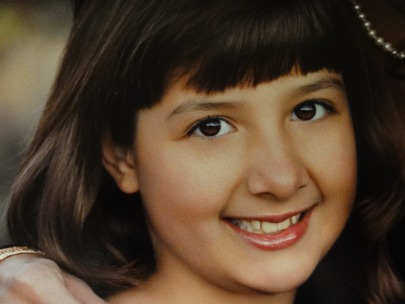
As our prayers go out to Representative Gabrielle Giffords for her recovery from the the heinous and brutal shooting in Tuscon last week, we also remember the victim bystanders who died from their wounds inflicted upon them by the diabolical Jared Lee Loughner. Christina Taylor Green (age 9) and US District Court Judge John Roll were senselessly slain by the psychotic madman. Both victims were members of the Catholic faith and regularly attended their local parishes. Christina had recently made her First Holy Communion.

---------------------------------------------------------------------------------  


As Tucson mourns, victims are remembered


By Catholic News Service

TUCSON, Ariz. (CNS) -- With flags nationwide flying at half-staff and people pausing for a moment of silence Jan. 10, the victims of the Jan. 8 mass shooting in Tucson were being remembered for their warmth and goodness, some for their sense of public service, and several for their involvement in their churches.

The attack during a Saturday morning meet-your-congressional-representative event at a Safeway shopping center left six people dead and another 14 wounded, including Rep. Gabrielle Giffords, 40, who hosted the event. The alleged shooter, Jared Lee Loughner, 22, was stopped by bystanders and is being held on initial federal charges related to the deaths of two U.S. government employees -- a federal judge and a congressional aide -- and the attempted murder of Giffords and two of her staff members.

Amid the outpouring of grief and shock in Arizona, the personal stories of the shooting victims were putting their faces into focus for the world.

U.S. District Court Judge John M. Roll, 63, and Christina Taylor Green, 9, who were killed, were both active in their Catholic parishes. Roll, the chief judge of the Tucson federal court, had stopped by the shopping center in northwest Tucson to see Giffords on his way home from morning Mass at St. Thomas the Apostle Church. Bill Badger, one of several people who tackled the shooter to stop his rampage, despite his own gunshot wound, also is active in the parish he shared with the judge, according to Fred Allison, spokesman for the Tucson Diocese.

Young Christina Green came to meet Giffords with a neighbor because she was so interested in civics, having just been elected to the student council at Mesa Verde Elementary School. The third-grader also was part of a children's choir at St. Odilia's, the Catholic church a few blocks from the shooting scene where a healing and remembrance Mass was scheduled for Jan. 11.

The young athlete was part of a sports-focused family. Her grandfather is former major league pitcher and manager Dallas Green, and her father, John Green, is a scout for the Los Angeles Dodgers. The only girl on her Little League team, Christina was born on Sept. 11, 2001, and was featured in a book called "Faces of Hope," about 50 babies born on that day of terrorist attacks on the United States.

Roll, a fourth-degree member of the Knights of Columbus, was remembered as "a person of great faith and great integrity" who was a devoted member of two Tucson Catholic parishes, according to Bishop Gerald F. Kicanas. Bishop Kicanas returned to Tucson hastily from the Middle East, where he was to attend the annual Coordination of Episcopal Conferences for the Church in the Holy Land, representing the U.S. Conference of Catholic Bishops.

The bishop was to preside over a Mass for the Healing of Our Community, Remembrance of Those Who Have Died, and for the Consolation of All Victims and Their Families at St. Odilia's, where Christina Green made her first Communion last spring.

"'Let the children come to me,' Jesus said (Mt 19:14). Christina is with him," wrote Bishop Kicanas to parishes.

Roll for many years began his day by serving at Mass as a lector at Sts. Peter and Paul Parish or St. Thomas the Apostle Church, the bishop said. "He lived his faith as a servant of our nation for the cause of justice."

Allison said he regularly saw Roll at the daily noon Mass at St. Augustine Cathedral, a few blocks from the federal courthouse downtown.

"He was absolutely dedicated and devoted in terms of daily Mass attendance and dedicated to the ministry as a lector," Allison said. "His faith was a wellspring of who he was as a judge and in his marriage.

The bishop put words to the emotions felt by people in Tucson and around the world who watched events unfold at the suburban shopping center.

"It is incomprehensible that such a horrible tragedy could happen in the community that we love so much," he wrote in his letter. "I am shocked and devastated as I see the horrible pictures on the news and hear the reports of those who have been killed and injured."

In a message, Bishop Kicanas sent to Allison as he left Jerusalem to return to Tucson, he said watching the television coverage from afar was overwhelming. "I could not sleep. I just wanted to return home as soon as possible."

He noted that "as I would expect, the community has risen to the occasion," with bystanders stepping up to help at the scene, medical personnel working feverishly, and public servants "trying to find answers to a horrific act of violence perpetrated against innocent people, everyone praying and offering support and condolences."

He said that before he left the Middle East, he concelebrated a Mass with 10 other bishops in a small Catholic church in Jericho, where only about 50 Catholic families are in the village, "but they all expressed to me their condolences for what happened in Tucson and promised their prayers as did each of the bishops from Canada, Albania, France, Germany, England and the Holy Land. Their comfort and heartfelt prayers meant a lot."

Bishop Kicanas went on to observe that "in the Holy Land, violence is feared and expected. Violence, too often, tears apart both the Israeli and the Palestinian people. Each community knows well the result of senseless violence. Their families have mourned the loss of loved ones and cared for those injured.

He added that the people in Jericho, hearing about the Tucson events, asked him how to prevent such acts of violence.

"I wish I knew the answer," he wrote. "But as the world continues to seek an answer to that question we can, each in our own way, strive to respect others, speak with civility, try to understand one another and to find healthy ways to resolve our conflicts.

"But right now it is important as a community to pull together and to reach out in care and concern to all who have been affected by this tragedy," he added.

Read more: http://www.catholiccourier.com/news/world-nation/as-tucson-mourns-victims-are-remembered/#ixzz1AjmiLHlU


Saturday, January 01, 2011

Buon Natale


Merry Christmas and Happy New Year from Our Lady of Good Counsel, Marysville, PA


My Blog List

Blog Archive